
People Don’t Stop Using a Building Because the Walls Need Paint
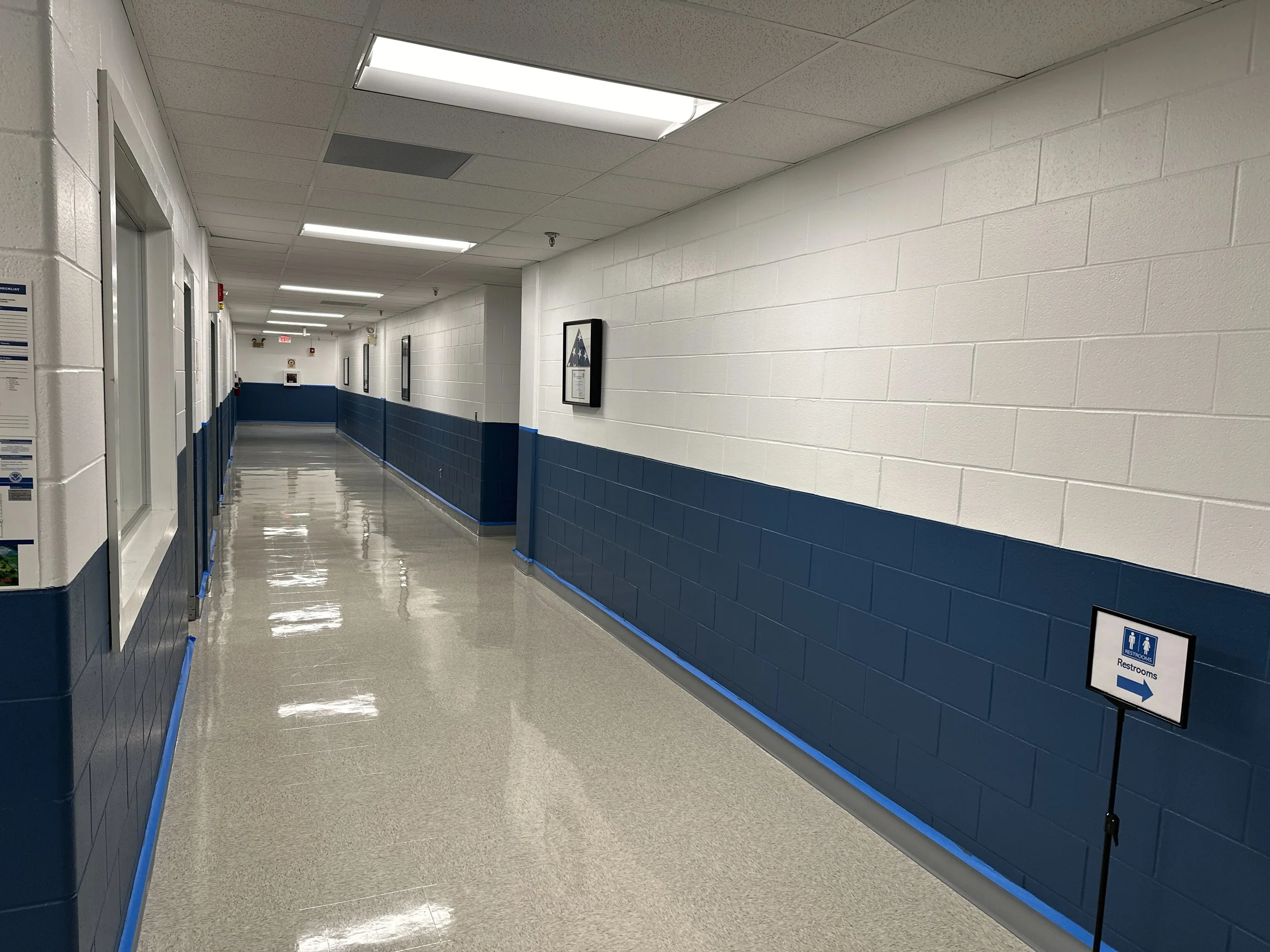
An office door opens. Someone heads for the elevator. Someone else comes through the stairwell.
And your crew is right in the middle of their route, painting the corridor.
That was the situation at DHS Building 61, where Goggans Coatings painted corridors while the building remained in use.
The people working there still had somewhere to be. Our job was to get the painting done while making room for them to go about their day.
It sounds straightforward. But it changes how you approach the work.
The Corridor Isn’t Yours
On an empty project, you have more freedom to spread out, stage materials, and move through an area.
In an occupied building, you’re sharing the space.
At Building 61, we always left enough room for people to pass through the corridors. Work near the elevator and in the stairwells required attention to work hours because those areas were part of how people moved through the building.
Noise mattered too. Just because our crew was working didn’t mean everyone else could stop.
That is something a square-footage takeoff doesn’t fully capture. The wall area tells you how much there is to paint. It doesn’t tell you everything involved in getting it painted.
Think About the Person Coming Through the Door
When you’re painting, you know what’s wet. You know where your equipment is. You know what you’re about to do next.
The person stepping out of an office knows none of that.
They’re thinking about a meeting, a phone call, or getting to another floor.
We marked wet surfaces with wet-paint signs and marked the back sides of doors to help prevent accidental injuries. Those precautions were part of working around people who weren’t focused on our work—and shouldn’t have to be.
We covered floors, taped the base, and removed and reinstalled pictures. We used zero-VOC products as part of our approach to working in an occupied space, alongside the product’s application and ventilation requirements.
None of that makes for a dramatic project story. It does require the crew to keep paying attention.
Sometimes a Good Job Is an Uneventful One
When I think back on Building 61, I don’t remember a major challenge.
The job turned out great.
We didn’t have to overcome some extraordinary obstacle to have something worth talking about. We had to handle the ordinary details consistently: protect the building, keep a path available, watch the doors, mark the wet paint, and work around the areas people needed to use.
That is a meaningful part of commercial painting.
A facility manager should not have to spend the day sorting out problems created by the painting crew. The people in the building should be able to understand where the work is happening and how to get through the area.
For general contractors planning occupied renovations, those expectations need to be part of the conversation before the crew arrives. Access, work hours, noise, protection, and product selection all affect how the work gets done.
At Goggans Coatings, Building 61 was a reminder that the finished walls are only part of what the customer experiences.
They also experience every day it takes us to get there.