
“Can you give me a price to paint 40 doors and frames?”
“Sure. Are we painting both sides?”
“Just the classroom side. The corridor stays as it is.”
That sounds clear until a painter opens the first door. Does the latch edge get painted? How far around the frame does the classroom color go? If the door down the hall swings the other way, does the same instruction still work?
At Goggans Coatings, we want those details settled before we price a commercial or federal repaint. Three painting contractors can count the same 40 openings and give the GC three different prices. The difference may come down to what each estimator understood “one side” to include.
Where Two Paint Colors Meet on a Hollow Metal Door and Frame
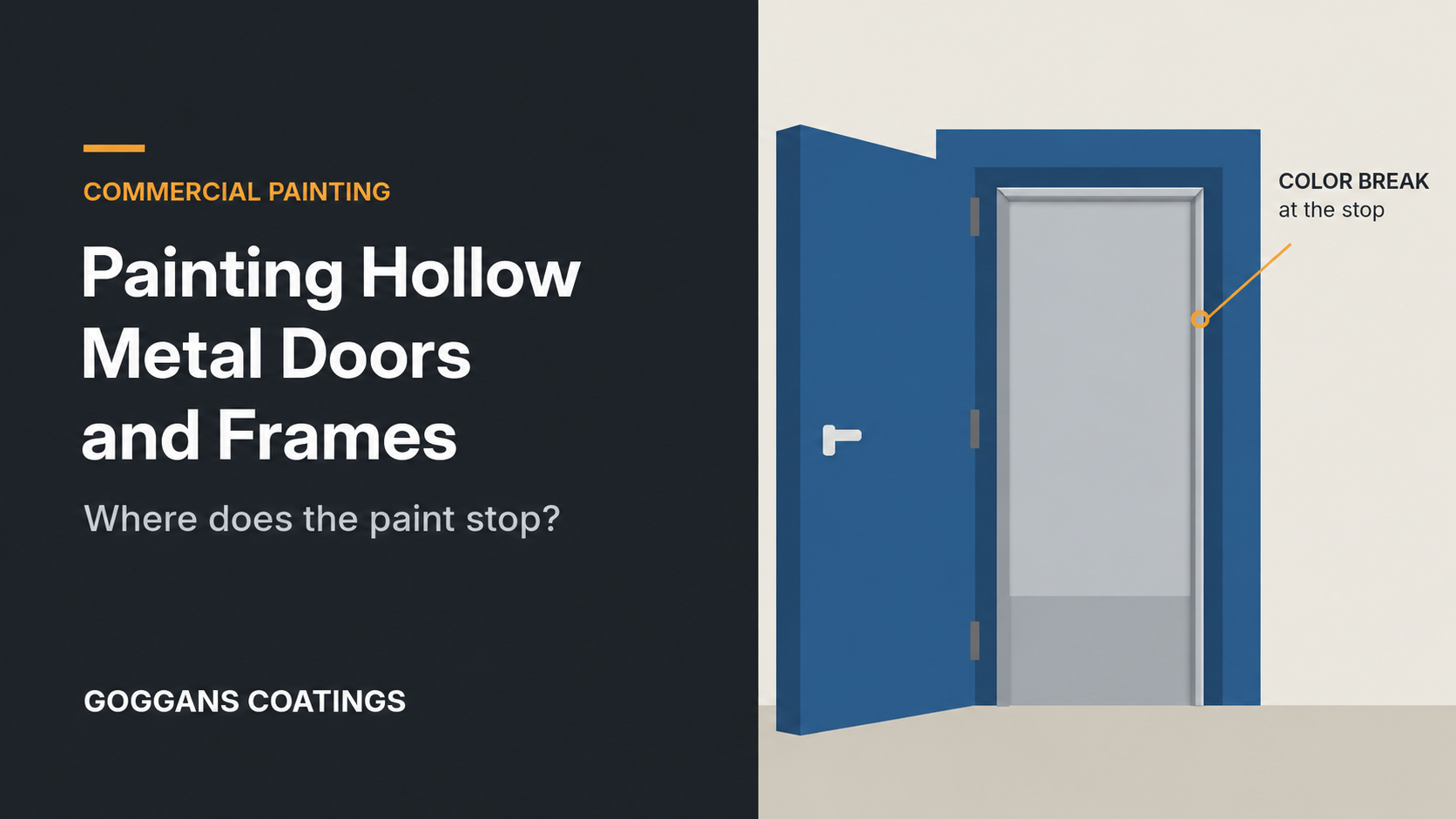
Take a classroom door that swings into the room. The classroom side is blue, and the corridor side is gray. If the drawings don’t identify the color break, here’s the detail I’d propose.
On the door, I’d paint the classroom face and the latch edge blue. The corridor face and the hinge edge get gray. Picture that door standing open in the classroom. The narrow edge you see beside the blue face is the one with the latch in it. If the next door swings out into the corridor, the hinge edge gets the classroom color instead.
On the frame, I’d carry the blue from the classroom face around the jamb to the inside corner where it meets the raised door stop. The stop gets gray. Follow that same corner up both jambs and across the head of the frame. With the door closed, someone standing in the classroom sees blue, and someone in the corridor sees gray.
If we’re repainting only the classroom side, that detail gives the crew a clear stopping point. On the inward-swinging door, we paint the classroom face, the latch edge, and the classroom side of the frame up to that inside corner. The existing gray finish on the stop and corridor side stays in place.
What Changes the Price on 40 Door Openings?
On a pre-bid walk, I’d look at the busiest entrance and then a door at the quiet end of the hall. Both may say “existing hollow metal frame” on the door schedule. One needs light sanding. The other has chipped paint down both jambs and a ridge where someone painted around an old strike plate. Which one looks more like the other 38? That’s worth knowing before bid day.
Access matters, too. Can the crew paint ten empty classrooms during a shutdown, or will the school release two rooms a day and need each door locked by five? That answer affects crew size, how long the doors can stay open to dry, and when the hardware can go back on. It also gives the GC a fair way to compare the painting bids.
Settle the Color Break on the First Opening
If the drawings leave room for interpretation, I’d spell out the assumption in the proposal. Before production starts, I’d walk one opening with the superintendent. Close the door and look at both faces. Then open it and point to the edge that gets painted and the exact corner where the frame color changes.
Once that detail is confirmed, mark it on a photo or sketch and put it in the foreman’s hands. When a painter asks, “Where do you want me to stop?” the foreman can show him. That’s a much easier conversation to have at door one than at door forty.
Goggans Coatings is an Alabama-based commercial and federal painting contractor serving general contractors on military, government and commercial projects across Alabama, Georgia and Florida.