
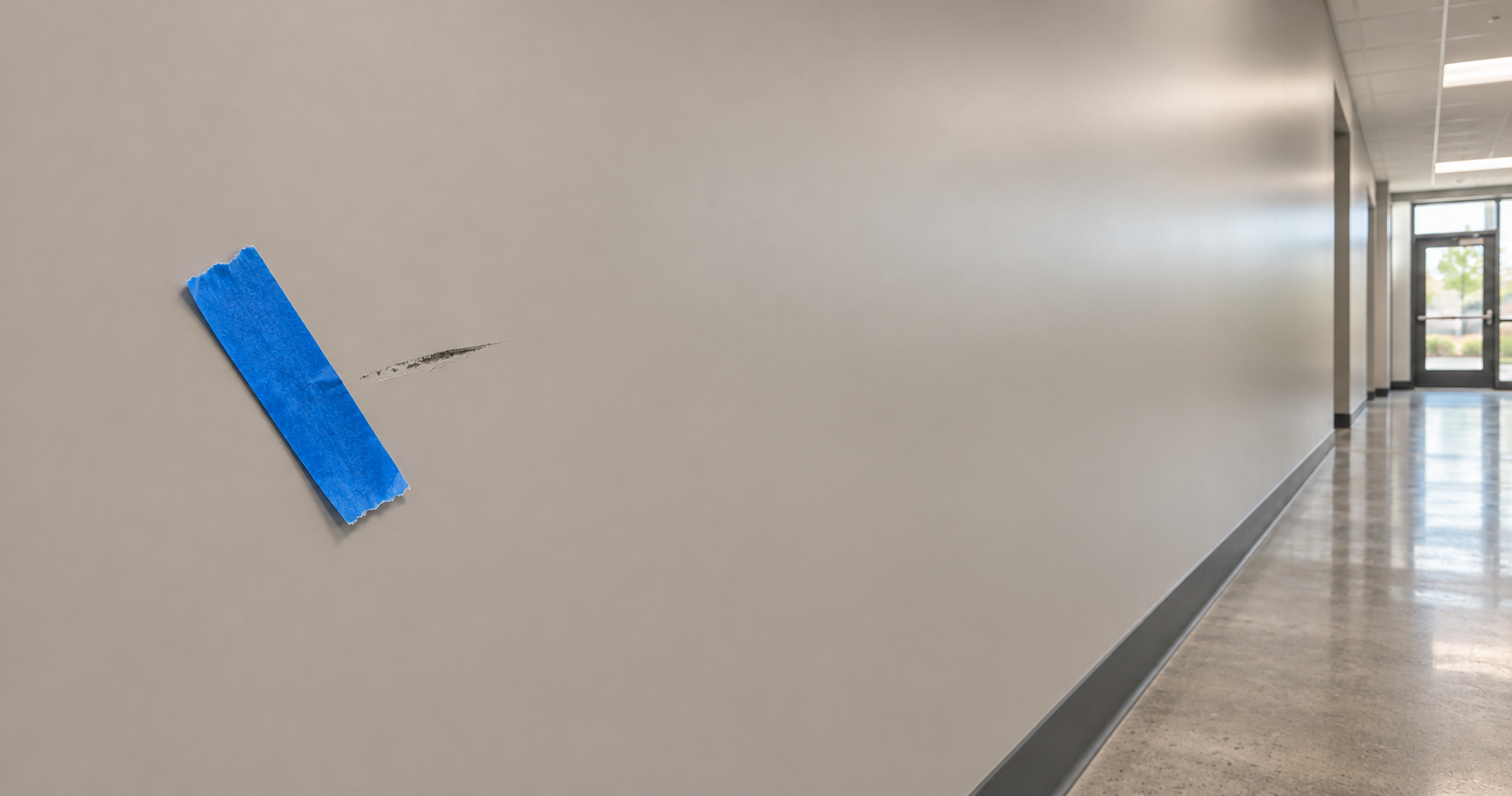
A piece of blue tape beside a scuff tells the painting crew exactly where to look. What it doesn’t tell them is where to stop painting. On the federal projects we paint at Goggans Coatings, the specification often calls for repainting the affected wall from corner to corner.
For a general contractor approaching turnover, that distinction matters. A punch list may have only three marks on it. If those marks are on three separate corridor walls, the work can be quite different from three local touch-ups.
What does the painting specification require?
A spot repair can match the color and still be visible. Stand directly in front of it and the wall may look fine. Walk down the corridor and look back toward a window, and a difference in sheen or roller texture can show where the repair stopped.
A punch-list note such as “touch up north corridor wall” identifies the location. The painting specification establishes the finish the crew needs to deliver. Where it calls for repainting to a natural break, the crew needs access to that full stretch of wall. At closeout, that can mean protecting finished flooring, removing pictures, and cutting in along base and door frames that weren’t in place for the original coat.
Who is responsible for the repair?
If we left a roller miss, it’s ours to correct. If that correction requires repainting the wall, we take care of the wall.
A gouge in a previously finished surface raises a different question. The painting crew may still be the right people to restore the finish. Who covers that work depends on what happened and what the painting subcontract includes.
A joint walk with the painting foreman, the superintendent, and the general contractor’s quality control (QC) representative is useful here. QC can identify the finish requirement. The foreman can explain what it will take to achieve it. The superintendent can coordinate when the area will be available. While everyone can still see the condition, it’s easier to photograph it, distinguish a correction from additional work, and agree on how to proceed.
When should an area receive its final coat?
Consider a wing where the rooms are ready, but the main corridor is still the route for carts, lifts, and materials. The superintendent knows how long that route will be needed. The painting foreman knows whether the rooms provide enough work for a productive crew run. Together, they can decide whether to finish the rooms as a group and schedule the corridor for a later pass.
Sometimes the turnover date means the corridor has to be painted while traffic is still moving through it. In that case, the useful conversation is how to protect the finished walls and when to walk them together.
That conversation can start before the first piece of blue tape goes up: Which areas can the crew finish, who still needs access, and when will the superintendent, QC, and painting foreman review the work?
Planning a federal or commercial painting project in the Southeast? Contact Goggans Coatings to discuss the finish requirements and how the painting work can fit your turnover schedule.